







Sammal on mielenkiintoinen ja omanlainen kasvi, joka ilmaantuu moniin paikkoihin hiljalleen ja silti yllättäen. Usein sammal mielletään harmilliseksi kasviksi, josta…
Tekijät | Authors
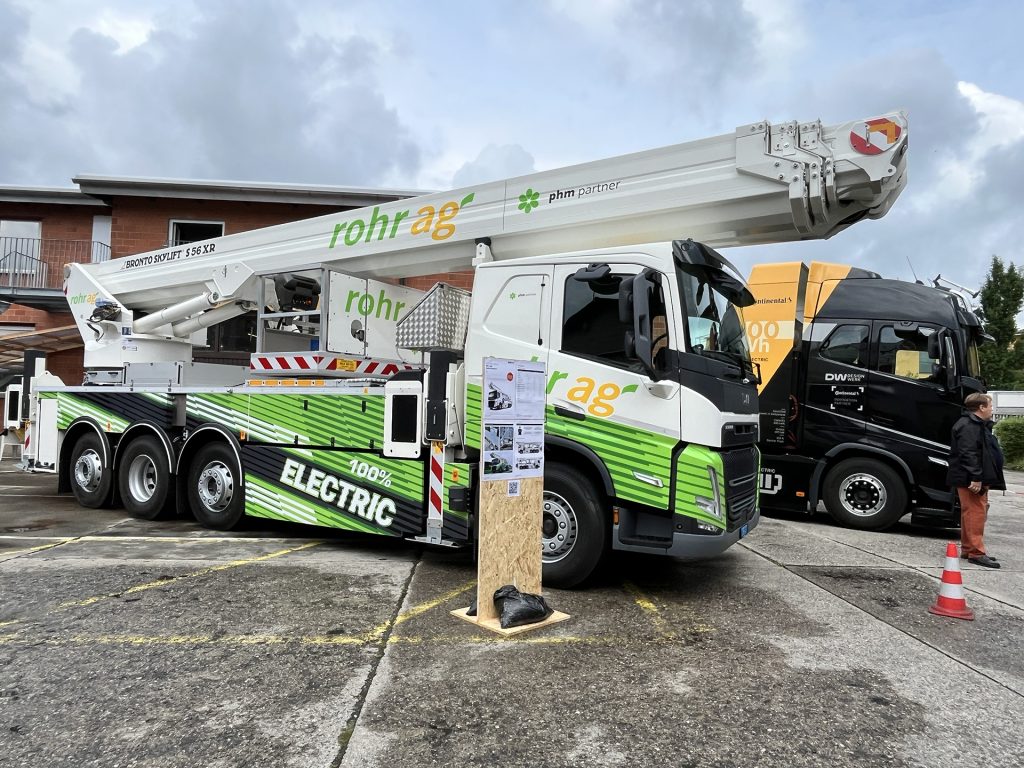
From Research to Highway: Electrifying Heavy Fleets in Finland
Electric trucks are no longer a vision – they are here. But how far can they go in a country of long distances, sub-zero temperatures and tight logistics margins? The Robocoast e-Heavy Vehicles (ReHV) -project at Turku University of Applied Sciences (Turku UAS) explores how heavy-fleet electrification can truly work in Finland.
EU Next Generation Program has financed a research program in which TUAS launched the ReHV – Retrofitting and Heavy Vehicle Electrification in Finland sub study to translate research into practical steps. Running from 2022 to 2025, the project brings together EU partners, workshops and technology leaders to test how diesel fleets can transition to electric within realistic budgets.
As the world shifts towards cleaner and more sustainable mobility, the transport industry plays a crucial role in reducing carbon emissions. To achieve climate goals and reduce air pollution, public authorities (primarily in Europe but also in Asia) are accelerating projects to restrict the number of vehicles with internal combustion engine (ICE) in circulation and replace them with zero-emission ones.The mission was to explore how the goals of the EU Clean Vehicles Directive (2019/1161) and the Heavy-Duty Vehicle CO₂ Standards Regulation (2019/1242, amended 2024/1186) can be implemented under Finland’s national transport strategy in a cost-efficient and economically sustainable way.
Finland is emerging as one of Europe’s leading hubs for battery and accumulator technologies, supported by rich reserves of nickel, cobalt and lithium, and a growing network of refining and cell-assembly facilities. Companies such as Terrafame Ltd, Keliber Ltd, Fortum Battery Recycling Ltd, and Ioncell Ltd are creating new value chains that connect raw materials, recycling, and circular-economy expertise. This industrial base provides not only secure access to critical materials but also a strong employment and innovation opportunity, positioning Finland to lead the transition toward zero-emission heavy vehicles and energy-efficient transport systems.
The study is based on interviews with stakeholders between 2023-2025 and numerous company visits. The focus has been to highlight the bottlenecks in electrification – not only with trucks but with other infrastructure as well.
Beyond technology: real-world barriers and opportunities
Electric trucks are now offered by nearly every major manufacturer, including Volvo Trucks, Mercedes-Benz, Scania, Renault Trucks, MAN and Daimler Truck AG. Across Europe, urban distribution fleets are leading the way, yet in long-haul and heavy-duty transport, progress remains uneven.
There are six factors still limit adoption of electrification:
- Charging infrastructure – still scarce and rarely suited to trucks requiring megawatt-class power or large turning areas,
- Vehicle prices – high upfront investments, especially for smaller operators, make scaling difficult,
- Battery capacity – directly affects distance, payload, and cold-weather performance,
- Societal readiness – technicians, mechanics and emergency responders must be trained to work safely with high-voltage systems, and companies need clear operational guidelines for electric fleets,
- Educational gap – Finland still lacks comprehensive training and degree programs in e-mobility maintenance, diagnostics, and charging infrastructure engineering, creating a bottleneck for workforce development and
- Logistics inertia – many transport companies still rely on route-planning and cost models optimized for diesel and have yet to adapt their business logic to the realities of electrified transport.
Despite these challenges, the driving forces are stronger than ever: EU climate targets, lower total operating costs, corporate sustainability goals and Finland’s commitment to energy resilience. Electric trucks are no longer a question of if – but how fast.
The Finnish testbed: cold climate, long distances and strong innovation
Finland provides one of the most demanding environments for electric transport especially for long-haul transport. Low population density, harsh winters and long supply chains make electrification complex, but once solved, highly replicable across other regions. ReHV’s role was to research what truly works under Finnish conditions: charging strategies, retrofit options, maintenance practices and cost structures.
There are lots of encouraging examples in Europe. Swiss manufacturer DesignWerk Technologies AG represents the cutting edge of heavy-duty electrification. Their trucks are used for distribution, snow removal, construction, agriculture, forestry, and recycling transport. State of art heavy vehicles combine modular battery systems of up to 1000 kWh with integrated DC fast charging. Together with trucks, DesignWerk AG produces also mobile charger and stationery/mobile battery backed chargers (SBC/MBC) which can charge electric trucks, buses, airplanes and ships in record time. These are not concept vehicles anymore. They are working machines, removing snow, hauling materials and performing day and night in several cantons in Switzerland. These electric special trucks for cleaning, waste management etc. can accelerate that even highly specialized municipal fleets can go zero-emission.
For Finland, DesignWerk AG examples proves that technology readiness is not the bottleneck, but instead it works well in snowy and cold mountain areas. The challenge is building the ecosystem around the vehicle. DesignWerk’s experience guided ReHV’s evaluation of operational needs: grid connections, depot layout, maintenance protocols and energy management under extreme conditions.
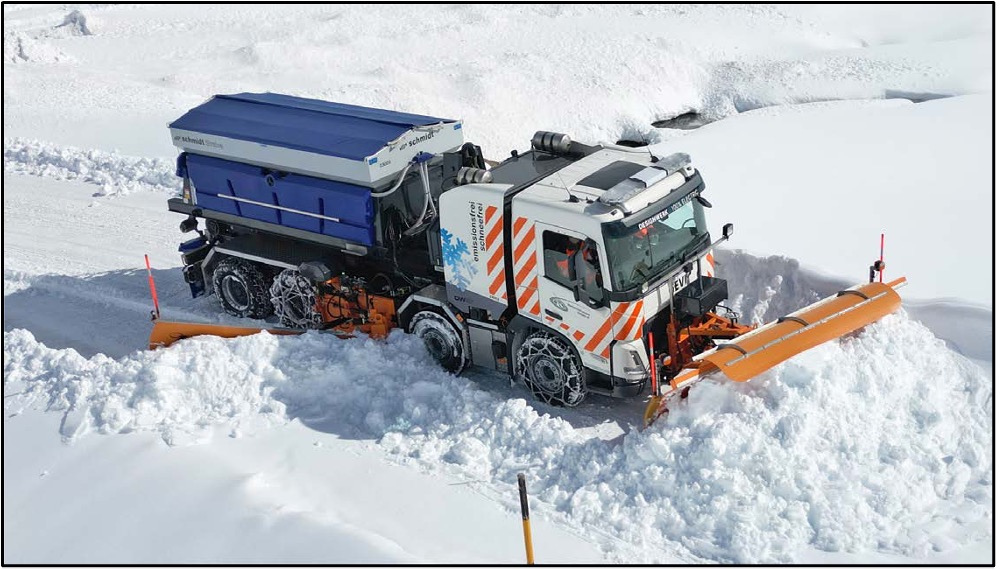
Photo 1. DesignWerk’s fully electric snow remover demonstrates that e-power can handle Nordic winters. Photo: DesignWerk Technologies AG.
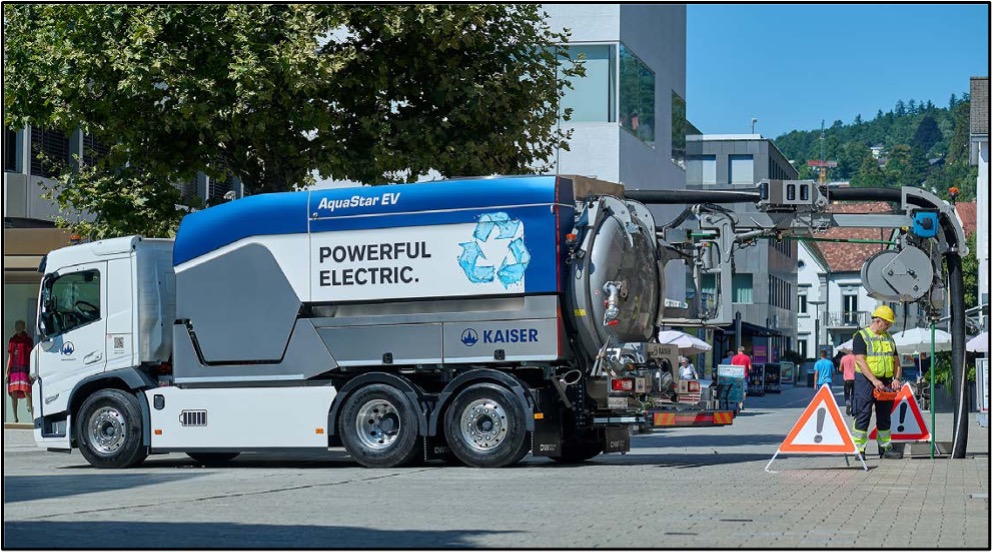
Photo 2. Kaiser electric sanitation trucks are used for industrial pipe cleaning. The usage of special electric can be good alternative. The driving distances are often relatively short, and batteries can operate longer than in long-haul transport. Photo: DesignWerk Technologies AG.
From pilots to practice: lessons learnt from ReHV-project
Through site visits, interviews and route analyses, the ReHV team identified four key enablers for successful electrification:
Start from depots, not highways
Building heavy-duty chargers where trucks already park overnight is far more cost-effective than focusing first on public corridors. A depot-first strategy, combined with smart load management, can reduce grid-upgrade costs by up to 30 percent. The electrification of transport is accelerating in Finland, extending beyond private passenger cars to heavy-duty trucks and logistics fleets. This transition is essential for achieving the national carbon-neutrality target by 2035, but it poses significant challenges for regional and local electricity networks. Heavy trucks require megawatt-level charging capacity, with single hubs potentially demanding 10–30 MW—comparable to the load of a medium-sized town. Once depot charging is in place, a limited number of strategically located high-power public stations along the TEN-T corridors (E18, E75, E8, E12) can connect the network efficiently.
The Trans-European Transport Network (TEN-T) forms the EU’s strategic backbone for freight and passenger transport. In Finland, it covers the E18, E75, E8 and E12 routes, linking major logistics hubs from Turku and Helsinki to Oulu and Lapland. Under the Alternative Fuels Infrastructure Regulation (EU) 2023/1804, these corridors are being prioritized for the rollout of high-power charging and hydrogen refueling stations, enabling the practical deployment of zero-emission heavy vehicles.
Retrofit as a bridge technology
There are 1.9 billion vehicles in use globally. Since it is not possible and economically viable for all of them to be replaced by new electric cars, retrofitting is emerging as a cost-effective solution (especially retrofitting of heavy-duty vehicles) that could accelerate the energy transition and reduce our carbon footprint. In recent years, multiple startups and innovative companies have emerged, offering tailored solutions to retrofit existing buses, trucks, and vans. According to North American firm Precedence Research, the global automotive retrofit electric vehicle powertrain market size accounted for USD 65.94 billion in 2024, and is predicted to surpass around USD 144.61 billion by 2034. In France, where the national energy and environment agency ADEME estimated that electric retrofitting would reduce greenhouse gas emissions by between 61 and 87% compared with diesel, the government launched a national action plan in aid of retrofitting, providing approximately 100 million euros to decarbonize transport.
Retrofitting is a mechanical operation where the petrol/diesel engine and fuel tank are removed and replaced with an electric motor and battery, or a hydrogen fuel cell. For heavy-duty vehicles, retrofitting existing diesel chassis with electric drivetrains provides an effective means of achieving rapid emission reductions without the need to wait for new Original Equipment Manufacturer (OEM) electric models. It also represents a sustainable pathway for recycling and extending the lifecycle of older or partially damaged trucks, contributing to the circular economy within the transport sector.
Cold climate requires planning, not compromise
Cold climate remains a critical factor for heavy electric vehicles. Low temperatures reduce battery efficiency and increase energy demand for heating, which can shorten range by up to one-third if not managed properly. Thermal pre-conditioning, smart heat management and route planning are therefore essential elements of any electrification strategy in Nordic conditions.
The ReHV project found that standardized inspection and safety protocols for retrofitted heavy vehicles are still under development. Similarly, there is no established model for charging infrastructure design in polar and cold-climate regions, where freezing conditions pose operational and safety challenges for both vehicles and equipment. As a result, the current performance of electric heavy vehicles in Finland is assessed within the limits of the existing regulatory and infrastructural framework, highlighting the need for further research and harmonized standards.
Drivers define success
User feedback showed that comfort, silence and torque make electric trucks popular once experienced. Training and clear charging routines eliminate “range anxiety” faster than any new technology.
Interviews indicated that truck drivers have different opinions about electric vehicles. Some were quite pessimistic about charging times and maximum distances, others met the change with enthusiasm. Nevertheless, increase in electrical vehicles is a driving force to rethink current education for the whole transport sector professionals.
Electric grid is essential
The electrical grid plays a pivotal role in the transition to heavy-duty electrification. The functionality of heavy-duty electrified transport, i.e. electric trucks and trucks, requires a sufficiently comprehensive charging infrastructure on the main road network in Finland. The EU’s AFIR regulation requires that it be implemented on the TEN–T network (Trans European Transport Network). A unified TEN-T core network is needed along highway 4. A more comprehensive network is also needed along highways 3, 5 and 9. There should be 14 individual sites in the core network and 40 in the comprehensive network.
These numbers fit the requirements of AFIR regulation. One charging pool needs about 4000 square meters of space. Effective progress requires a coordinated approach between government, energy suppliers, and fleet operators to develop a balanced and future-proof charging infrastructure. Megawatt and other high-power charging solutions significantly increase peak electricity demand and are associated with higher connection and energy costs. Conversely, slower overnight charging offers lower operational costs but demands careful infrastructure planning, particularly for depot areas and designated rest zones where vehicles can remain connected for extended periods.
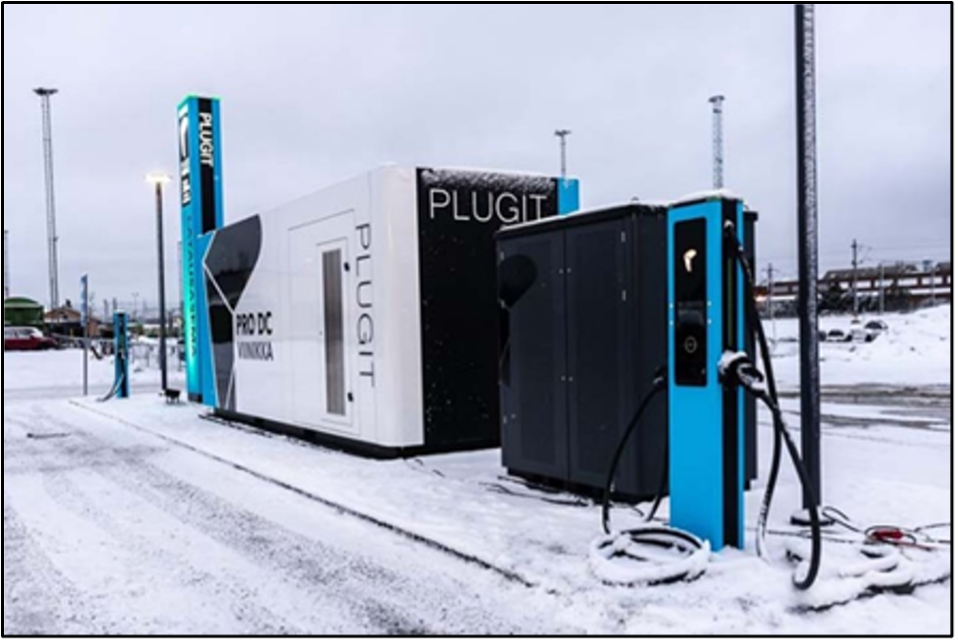
Photo 3. Electric grid and network of charging stations needs cooperation between stakeholders. Photo: DesignWerk Technologies AG.
Why electrification pays off ?
While the vehicle purchase price is higher, electric trucks deliver lower total cost of ownership within 5 – 7 years. Electricity is cheaper and more stable than diesel, maintenance needs are lower, and braking energy is recovered on every downhill.
Moreover, depots can become part of Positive Energy Districts, feeding surplus energy back into the grid or neighboring buildings. This fits Finland’s national strategy for integrating transport, energy and urban planning. Electric trucks don’t just consume energy but instead they can stabilize the grid. That changes how we think about logistics hubs altogether.
Looking ahead: scaling a national network and fleets
ReHV’s findings highlight four priorities for national implementation:
- Adopt corridor logic: link depot clusters with at least one heavy-duty public charger per main highway,
- Support retrofitting: invest in technology development, streamline approvals and train inspectors,
- Invest in competence: mechanics, electricians and drivers all need updated e-mobility safety skills and
- Encourage data sharing: anonymized route data helps planners and grid operators target investments effectively.
Finland’s heavy-fleet transformation will not happen overnight, but the foundations are already in motion. European companies and innovators have proven that electric trucks can perform in harsh Nordic conditions. ReHV ensures that regulation, infrastructure and local competence evolve at the same pace.
Electric trucks are not waiting for the future – they are already working. Electric vehicles for commercial transport have now proven their readiness for the most demanding municipal and industrial operations. Nordic regions, in particular, benefit from these high-performance zero-emission systems that combine climate action with operational safety.
Turku UAS continues to collaborate with public and private partners to develop new logistic hub models, retrofit standards and corridor charging integration across Finland.