







Tekoäly (AI) on tullut jäädäkseen myös B2B-myyntiin. Silti sen tuoma hyöty ei synny yksittäisistä työkaluista tai käyttöönottoprojekteista. Turun ammattikorkeakoulun Myynti…
Tekijät | Authors
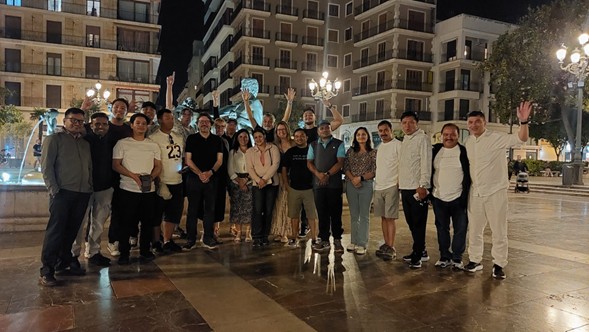
Empowering teachers through digital adoption and sustainability in Nepal
Empowering teachers and transforming classrooms by providing training in digital pedagogy, entrepreneurship, and sustainability skills has been the main focus of NEWSTEP-project. The project also strengthens institutional capacity, promotes inclusive learning, and aligns education with global sustainable development goals.
Nepal faces significant challenges in digital transformation, yet these challenges present opportunities for educational innovation. With nearly 80% of the population living in rural areas and internet penetration below 40%, access to quality education remains uneven. Although infrastructure for connectivity is improving rapidly, higher education institutions have recognized need to build capacity to design and deliver online education both as a strategic and practical priority at institutional, national, and international levels.
Social barriers such as poverty, gender bias, disability, migration, and conservative norms limit enrollment and attendance, while functional obstacles include high education costs, resource shortages, teacher absenteeism, and overcrowded classrooms. These barriers, coupled with poor infrastructure and limited use of IT tools, have created a greater opportunity divide, particularly in HEI, schools, and business enterprises. The divide is most greatly felt by students from lower economic backgrounds, students in rural communities, female population, resulting in an increase in gender inequality and further limiting access to quality education. According to UNICEF, most of the school dropouts come from impoverished households or live great distances from school (UNICEF, 2020).
Limited use of IT tools in HEIs has widened the digital divide, disproportionately affecting rural students, women, and those from low-income backgrounds, increasing inequality and restricting access to quality education. Seasonal disruptions like monsoon closures further exacerbate these challenges (ADB, 2010).
Addressing these gaps requires equipping educators with digital and pedagogical competencies, modernizing curricula, and integrating sustainability and entrepreneurship into teaching practices—solutions that the NEWSTEP-project delivers through targeted training, innovative course development, and institutional capacity building.
The project’s activities have addressed challenges in digital adoption and capacity building. A hands-on approach in the training sessions held with the teachers ensured that stakeholders were actively engaged throughout the process. Educators were trained in digital pedagogy and Innopeda® pedagogical approach, emphasizing interactive and student-centered learning. The training equipped educators with modern teaching tools and methods, and as a result, hybrid and online teaching quality has been significantly improved.
Innovation pedagogy is a strategic approach that encompasses cornerstones as tools and methods. The aim is to create graduates that can innovate in work life, have skills to work in teams, and are able to take initiative. These are achieved through activating learning and teaching methods where students take responsibility for their own learning. Cooperation between working life and studies is important to give the competences the students need to succeed. It also requires the educational institution to have flexible curricula that allows for versatile progression and personalization of study paths. The teacher and student both need to take on a new role where they focus on a development-oriented and active learning process and culture. (Konst & Kairisto-Mertanen, 2020)
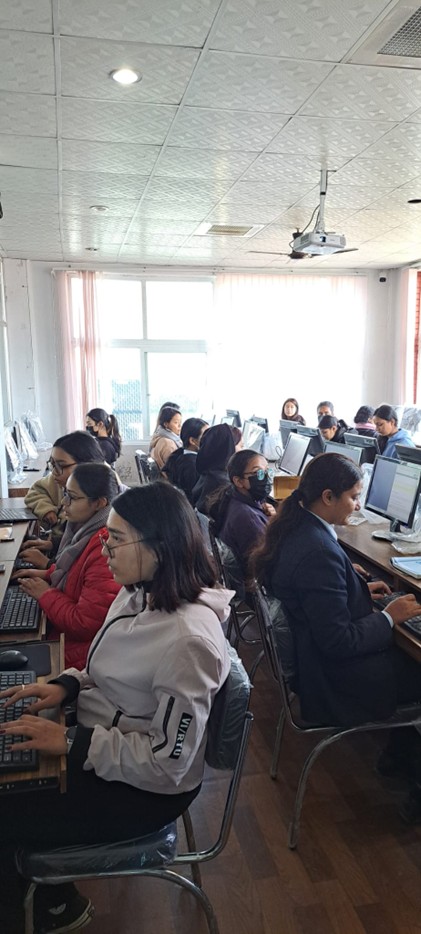
Image 1. Padma Kanya Multiple Campus, Kathmandu, students diving into programming fundamentals.
During the project, a total of 25 new courses were developed in collaboration with European partners, and 28 educators were trained across five institutions. The updated courses were piloted across partner institutions. These courses integrated digital tools and entrepreneurial skills, modernizing the curriculum and improving employability prospects for students in Nepal. To ensure scalability, local educators were trained as digital gurus. Knowledge dissemination within institutions was facilitated by these gurus, guaranteeing that competencies developed through the project were shared across the institutions.
In terms of the quality of their online teaching experience, the teachers reported a variety of experiences, ranging from enjoyment to major challenges. Those teachers who reported positive experiences, stated enjoying the convenience and flexibility of online teaching. In addition, positive experiences included the use of multimedia tools for teaching, such as visual-based techniques, as they can enhance the learning experience and make it more interactive. Some negative experiences were reported in the quality of the online teaching experience, related to learning experience of the students when comparing the online to contact based teaching, and those related to technical difficulties; the difficulty in assessing whether all students have understood the topics compared to physical class.
Transforming education for sustainability
Entrepreneurship Seminar on Nepal’s Digital and Entrepreneurial Education organized by Siddhartha Vanasthali Institute (SVI) brought together educators, students, entrepreneurs, and policymakers to explore transformative education. The programme set the foundation for academic development with blended cultural immersion.
A student‑led symposium showcased digital learning tools, and consortium partners from Finland, Nepal and Spain addressed alignment between education and real‑world needs. The seminar captured a shared commitment to carry digital innovation, entrepreneurship, and sustainability forward into classrooms and communities, affirming NEWSTEP as a movement advancing Nepal’s future‑ready educational landscape.
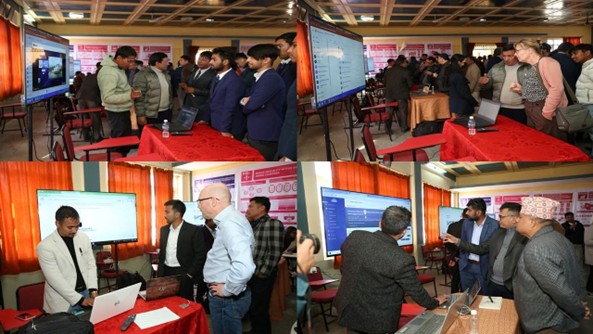
Image 2. Teachers from SMC, SCTI, SA, SVI demonstrating the online courses developed through project NEWSTEP.
A comprehensive assessment of Nepal’s progress and challenges in achieving sustainable development, particularly in education and community practices were outlined in the Baseline Report (NSBR). The report found Nepal’s education system as diverse but uneven, with urban areas enjoying better resources than rural regions. External factors, such as the 2015 earthquake and the COVID-19 pandemic disrupted education, causing infrastructure damage, learning loss, and increased inequality. Despite these challenges, opportunities emerged through remote learning, teacher training, and blended education models supported by NEWSTEP.
The report aligned its analysis with the United Nations’ 17 Sustainable Development Goals (SDGs), emphasized integrating global citizenship and sustainability education into curricula, teacher training, and institutional strategies. At the community level, Kathmandu faced severe sustainability issues due to rapid urbanization, air pollution, and waste management problems. Initiatives such as river cleaning campaigns, tree plantations, electric vehicle adoption, and social enterprises promoting renewable resources were highlighted. Similarly, Sindhuli demonstrated progress through healthcare services, inclusive education for children with disabilities, community forestry, and economic activities like Junar (mandarin) farming, which supported SDGs related to poverty reduction and economic growth.
HEIs under NEWSTEP implemented sustainability practices including solar energy, rainwater harvesting, ICT integration, zero-plastic strategies, and gender equality measures. The report concluded that while Nepal faced significant sustainability challenges, collaborative efforts through NEWSTEP and local initiatives laid the foundation for a future-ready education system and resilient communities.
Challenges
Several challenges were encountered during project implementation. NEWSTEP, being the first capacity-building project coordinated by a Nepalese institution, faced delays in fund disbursement due to red tape and the lack of a legal framework to transfer money from Nepal to EU partners. These bottlenecks were addressed by creating a new framework, which is now used by other EU-funded projects.
In addition, logistical barriers in remote areas were mitigated by adapting training modules for offline delivery and providing centralized training locations. Disparities in institutional readiness were managed by customizing training methodologies to suit urban and rural contexts.
Slow adoption of the digital ecosystem platform was observed in some institutions due to limited technical expertise. Additional workshops and technical support were provided to overcome these challenges. Despite these obstacles, resilience and adaptability were demonstrated throughout the project, ensuring that objectives were met while laying a strong foundation for scalability.
Future Directions
The NEWSTEP project has contributed significantly to Nepal’s educational landscape by providing digital and online pedagogical skills in the participating educational institutions. By equipping educators with advanced tools and methodologies, the project has highlighted the potential of education as a driver for sustainable development. Through pedagogical training, the teachers are better equipped to design online teaching in a meaningful way that supports learning better. In addition, the students have a wider selection of online classes that are pedagogically designed, utilize various digital tools and activate them as learners. The HEIs are able to plan their activities more strategically and see the development of digital competences as an important tool to develop more sustainable solutions in education.
Moving forward, the final phase focuses on expanding teacher training, increasing course coverage, and strengthening peer mentoring, with the overall aim to ensure that the transformative impact of NEWSTEP continues to grow.
More info about NEWSTEP project
The NEWSTEP project, Nepal Way to a Sustainable Transformational Educational Programme, is a 36-month initiative (May 2023–2026) funded by the European Union under its Capacity Building in Higher Education Programme. Coordinated by Sindhuli Multiple Campus in Nepal, the project brings together Nepalese higher education institutions and European partners, including Turku University of Applied Sciences in Finland and Universitat Politècnica de València in Spain.
Its primary aim is to modernize Nepal’s higher education by integrating digital pedagogy, entrepreneurship, and sustainability strategies. The project focuses on improving teaching quality through digital tools and online course design, strengthening collaboration among institutions, developing entrepreneurial and digital skills for students and educators, and embedding sustainability and equality into institutional strategies.
References
Asian Development Bank, 2010. Overview of Gender Equality and Social Inclusion in Nepal, Mandaluyong: Asian Development Bank. available at https://www.adb.org/sites/default/files/institutional-document/32237/cga-nep-2010.pdf [Accessed on ]
Konst (e. Penttilä), T. & Kairisto-Mertanen, L. 2020. Developing innovation pedagogy approach. On the Horizon. Vol. 28, No 1, 45 – 54. DOI: https://doi.org/10.1108/OTH-08-2019-0060
(UNICEF, 2020). Nepal 2020 Country Office Annual Report. UNICEF. Available at: https://www.unicef.org/media/101061/file/Nepal-2020-COAR.pdf [Accessed 11 December 2025].
TURKU UAS (2024). Nepal Way to a Sustainable Transformational Educational Programme (NEWSTEP). A project webpage. https://www.tuas.fi/en/research-and-development/projects/nepal-way-to-a-sustainable-transformational-educat/
Artikkeli on osa Yrittäjyys ja arvonluonti -tutkimusryhmän julkaisuja.