







Luonto tarjoaa keholle ja mielelle ainutlaatuisen paikan rauhoittua. Moniaistinen ympäristö aktivoi hermoston palautumista, vahvistaa turvan tunnetta sekä tukee lasten ja aikuisten hyvinvointia. Tutkimus osoittaa,…
Tekijät | Authors

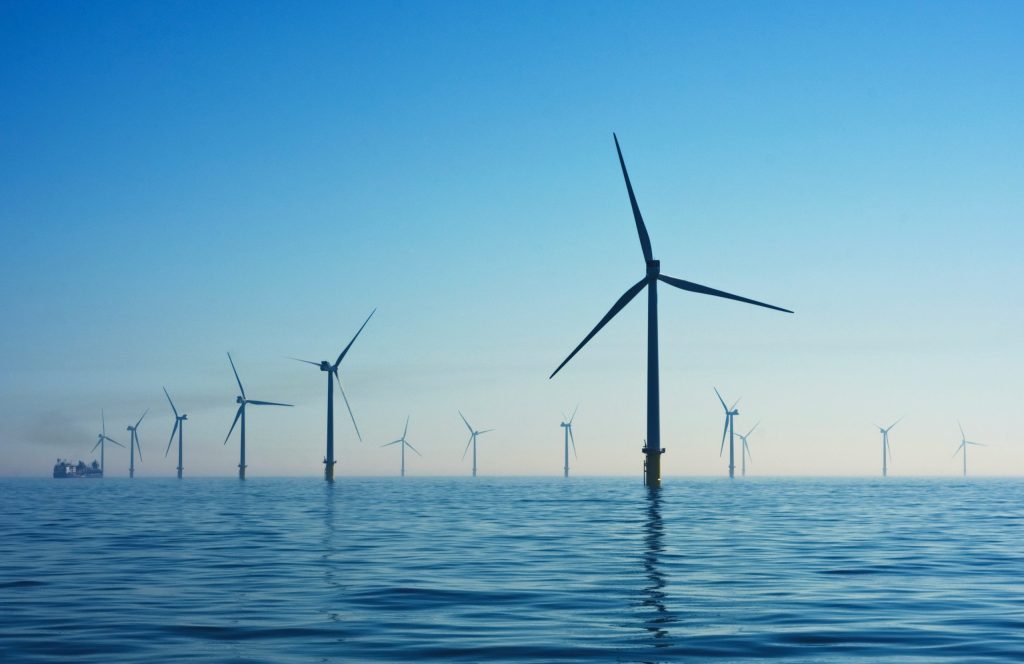
Underwater noise during the construction phase of offshore wind farms
The potential of offshore wind energy within the energy transition is growing rapidly. The construction phases of offshore wind farms generate harmful underwater noise, but the impacts of this noise on the marine environment have not been fully understood.
Underwater noise can affect marine animals by masking important environmental sounds and communication and by causing stress, behavioural changes, hearing damage, and other physical injuries. The characteristics and levels of underwater noise vary depending on the construction phase. Pile driving and explosions generate loud impulsive noise, while increased vessel traffic raises continuous low-frequency noise throughout the construction process. At its most severe, underwater noise can cause direct or indirect mortality in marine animals. However, mitigation measures can reduce construction phase noise levels and minimize their impact on the marine environment.
The aim of this report was to gather current knowledge through a literature review on the noise levels during the construction phases of offshore wind farms and the effects of underwater noise on the marine environment. Based on the literature review, an assessment was conducted to estimate the construction phase impacts of the Navakka Offshore wind farm project on the marine environment.
1 Introduction
In the ongoing energy transition, the focus is shifting towards renewable energy sources, with increasing attention on offshore wind energy. Finland aims to significantly increase its electricity production from renewable sources, supporting both the EU’s 2050 climate neutrality target and Finland’s more ambitious goal of achieving carbon neutrality by 2035. (Ministry of Economic Affairs and Employment, 2024). While the environmental impacts of onshore wind energy have been extensively examined, the effects of offshore wind farms on the marine environment remain understudied and not fully understood. The impulsive, continuous noise generated during the construction period and operational phases should be further investigated to assess its effects on the underwater environment and identify potential adverse impacts.
Underwater noise is known to be capable of disrupting the communication of fish and marine mammals, which can lead to disruptions and behavioural changes. Species that depend on sound for navigation and prey detection are also affected by noise pollution. Loud impulsive sounds, such as from pile driving, may even cause physical harm, including temporary or permanent hearing loss. (OSPAR, 2009; Tougaard, 2021.)
This report examines underwater noise generated during offshore wind farm construction and its impact on the marine environment, based on a review of relevant literature. Various stages of the construction process generate different types of noise, with intense impulsive sounds often occurring at the beginning. Marine traffic during both the construction and operational phases also contributes to noise pollution.
By analysing noise levels and quality, it is possible to assess whether they affect the surrounding marine environment and its inhabitants. This analysis helps to identify the potential construction stages that cause noise disturbances and that may require attention.
The research comprises two main components: a literature review and a case study. The literature review summarises the current knowledge on underwater noise and its environmental impacts during the construction phase of offshore wind farms. The case study section applies these findings to assess the anticipated noise levels and environmental impacts of the planned Eolus offshore wind project in the Baltic Sea.
2 Underwater sound and noise
Underwater soundscapes encompass both benign sounds and potentially harmful noise, and it is important to distinguish between these terms. TG-Noise (2019) defines underwater “sound” as acoustic energy that naturally occurs in marine environments without causing harmful effects. The term “noise”, in contrast, is used specifically when acoustic energy disturbs marine life or their habitats.
2.1 Marine soundscape
The underwater soundscape originates from various sources. Natural sounds are generated by wind, ice movement and marine life activity, with marine mammals and other species actively contributing to this acoustic environment. Many marine animals rely on sound as a vital tool for survival and communication. They use acoustic signals not only for interactions between individuals, but also for locating food, navigating their environment, and detecting predators. (NOAA, 2024; NOAA, 2016.) Human activities introduce underwater noise into the marine environment. According to the International Maritime Organisation (IMO, 2023), commercial shipping is the primary source of underwater noise. Additionally, activities like underwater construction and sonar use contribute significantly to anthropogenic noise in marine environments (NOAA, 2016).
Noise can be categorised into continuous noise and short-term, impulsive noise. Continuous noise originates from natural and anthropogenic sources (TG-Noise, 2019). Anthropogenic continuous noise mainly results from shipping, but also from the operation of offshore wind farms. Impulsive noise primarily arises from underwater construction activities such as pile driving and explosions (HELCOM, 2023a).
2.2 Underwater sound measurement
Measuring underwater noise in marine environments follows specific methods and guidelines. In the Baltic Sea, HELCOM provides monitoring guidelines for both continuous and impulsive noise. The monitoring recommendations for the Baltic Sea specify specific frequency ranges that align with the hearing ranges of marine mammals. Measurements are conducted using hydrophones and associated rigs. Guidelines also include specific instructions for hydrophone installation to avoid unwanted noise radiation and disturbance (HELCOM, 2019).
For continuous noise, HELCOM (2019) recommends presenting data as either full-bandwidth or third-octave frequency Sound Pressure Level (SPL). The UK’s National Physical Laboratory (NPL) advises that continuous noise be measured using the time-averaged Sound Pressure Level (SPL), with the Sound Exposure Level (SEL) used for both continuous and impulsive noise. Continuous noise requires longer, fixed measurement periods, while impulsive noise focuses on individual events or pulses. SEL measurements adjust frequency to match the receiving animal’s hearing sensitivity. Impulsive noise measurements include peak sound pressure level, which denotes the highest pressure during measurement, and peak-to-peak level, which indicates the range between the lowest and highest pressures. (NPL, 2014.)
Understanding the effects of underwater noise, particularly on fish, involves studying particle motion and vibration. These factors significantly impact marine life, but current technologies cannot measure them reliably. (NPL, 2014). Future monitoring guidelines will likely incorporate new measurement technologies as research advances.
2.3 Regulatory framework of underwater noise
International and EU regulations form the foundation for underwater noise management in marine environments. At the international level, the United Nations Convention on the Law of the Sea (UNCLOS) provides the framework for protecting the marine environment from anthropogenic impacts, while the IMO’s Marine Environment Protection Committee offers non-binding guidelines for reducing vessel noise (UNCLOS; IMO, 2023).
The Marine Strategy Framework Directive (MSFD) (2008/56/EC) sets requirements for European Union Member States on the management of underwater noise. According to the directive’s qualitative descriptors for good environmental status: ”The introduction of energy, including underwater noise, must be at levels that do not adversely affect the marine environment.” (European Parliament and Council, 2008.) The European 2017 Commission Decision (2017/848) distinguishes between impulsive noise (D11C1) and continuous low-frequency noise (D11C2) and requires Member States to set appropriate threshold values. In the Baltic Sea region, HELCOM coordinates regional cooperation between coastal countries and the EU, developing monitoring guidelines and research initiatives (HELCOM n.d.).
Member States are responsible for establishing their own regulatory frameworks, and there are variations in implementation across the Baltic Sea region. Germany and Denmark have introduced specific regulations governing noise from offshore wind farm construction. German regulations (BMU, 2013, as cited in Brandt et al., 2018) impose strict noise-control requirements during pile driving; the SEL05 (Sound Exposure Level exceeded during 5% of piling time) must remain below 160 dB re 1 μPa²s at a distance of 750 metres. Additionally, marine mammals must be deterred from the area using acoustic deterrent devices before piling begins, and operations should proceed gradually (Brandt et al., 2018). Finland is still in the preparatory phase. In its action plan, proposal number 13, the Ministry of Economic Affairs and Employment (2024) proposes to “launch studies on the impact of offshore wind energy on migratory fish, marine mammals, migratory birds and bats”.
The Danish framework differs in that it accounts for the cumulative effects of pile driving and species-specific safety distances. For the Baltic Sea, these distances extend beyond 10 kilometres for harbour porpoises but remain below 750 metres for seals. Unlike Germany’s unweighted thresholds, Danish guidelines use frequency-weighted SEL values that vary by frequency and target species, making direct comparisons between the two approaches challenging. (Tougaard & Mikaelsen, 2023.)
The Finnish Government’s report discusses the challenges and development needs related to evaluating cumulative effects and synergies. According to the report, there is a need for better cooperation between project developers and public authorities to evaluate cumulative effects and synergies. They report that it is not possible to conduct a sufficiently comprehensive assessment of individual projects, partly due to the lack of planning data from other projects. In addition, the lack of cooperation and information at the cross-border level creates its own challenge. (Vihavainen et al. 2024.)
The Underwater Sound Working Group in the Netherlands developed a framework for assessing the cumulative impacts of impulsive noise on North Sea marine mammals. This framework is part of the offshore wind impact assessment prepared by Rijkswaterstaat, the Dutch infrastructure and water management agency. The framework evaluates the potential cumulative effects of impulsive underwater sound on North Sea marine mammal populations, especially harbour porpoises. It also assesses the size of these effects in scenarios involving wind farm construction and seismic surveys. The assessment employs the Interim PCoDm model, developed in the United Kingdom (Heinis & de Jong, 2015). Based on this framework, Finland could also develop its environmental impact assessment methods for cumulative effects.
2.4 Environmental impacts of underwater noise
2.4.1 General effects of underwater noise on marine life
Assessing the impact of underwater noise is challenging because individual responses vary widely (Tougaard et al., 2021). The way animals respond to noise varies with age, sex and hunger state (OSPAR, 2009; Russell et al., 2016). At the population level, effects are particularly difficult to measure because it is difficult to distinguish natural from anthropogenic disturbances (Tougaard et al., 2021).
2.4.2 Masking effects
Ambient noise can mask important underwater sounds, disrupting both communication between individuals and echolocation abilities. This disrupts essential behaviours like foraging and mother-offspring bonding. In severe cases, animals may struggle to find food or detect predators, which can be fatal. (OSPAR, 2009, 26.)
2.4.3 Behavioural responses
Noise can cause changes in animal behaviour, ranging from mild to severe reactions. These responses vary based on individual characteristics, including age, gender, and typical behaviour patterns. Recurring noise disturbances affect animals’ time management, as the time spent avoiding noise reduces the time available for essential activities such as resting and feeding (Tougaard, 2021).
The complexity of behavioural responses makes it difficult to assess disturbance, especially at the population level. This challenge complicates the development of noise regulations based on behavioural effects (OSPAR, 2009; Tougaard, 2021). Population-level assessments focus on quantifying how underwater noise affects both population size and the extent of habitat affected. Key factors include the distance from the noise source, the location of the disturbance and the duration of exposure (Tougaard, 2021).
2.4.4 Hearing damage
Hearing loss impairs the ability of marine mammals to detect predators and communicate with others. Damage occurs as a temporary threshold shift (TTS) or a permanent threshold shift (PTS). TTS allows hearing to recover within hours or days, while PTS results in irreversible hearing loss at certain frequencies. (OSPAR, 2009.) Repeated exposure to even low levels of TTS can also lead to PTS (Skjellerup et al., 2015).
2.4.5 Other physical effects
The physical impacts of noise extend beyond the auditory organs. Marine mammals and fish can suffer severe physical injuries from large pressure changes, which can be lethal. Observed injuries in marine mammals include internal bleeding, expansion of brain chambers, and organ damage. Studies have shown that particularly vulnerable areas are the liver, lungs, and auditory system. The damage can include broken bones in the middle ear and bleeding in internal organs. (Ketten, 2004.) Similarly, Popper et al. (2014) found that pressure changes can harm fish with swim bladders. Rapid pressure changes can cause swim bladders to move rapidly, potentially damaging adjacent tissue or rupturing the swim bladder. These injuries can kill fish immediately or weaken them, making them easier prey or more vulnerable to diseases. (Popper et al., 2014.)
2.4.6 Effects on physiological and molecular response
Anthropogenic underwater noise has adverse effects on marine biota at both the molecular and physiological levels. At the molecular level, it has been shown to affect gene expression. According to a review by El-Dairi et al. (2024), studies have identified effects related to oxidative stress, metabolism and immune responses. At the physiological level, the effects also involve various disturbances. Marine biota suffer oxidative stress and show metabolic and neurological responses, among others (El-Dairi et al., 2024).
2.4.7 Cumulative impact and synergies
It’s important to include cumulative impacts in marine planning. These impacts result from the effects of the project’s different phases, as well as other operations in the surrounding area. The literature on the environmental impacts of offshore wind energy has identified a need to pay greater attention to cumulative and synergistic impacts and to improve understanding of them (e.g., ICES, 2014; Kumpel et al., 2025).
Kuempel et al. (2025) noted that species can overlap across project areas and that projects can share the same space for their activities. The effects begin to accumulate when individual noise disturbances are repeated or overlap with disturbances from other projects. These impacts can affect habitats and how animals spend their time, influencing activities including feeding (Heins & De Jong, 2015).
2.5 Setting threshold values
Studies on the effects of underwater noise have attempted to provide more accurate information on threshold values for adverse effects in marine animals. Due to the complexity of estimating these effects, setting exact thresholds is not always possible (Kastelein et al., 2013). Tougaard et al. (2022) note that the results are somewhat cautious and that additional supporting data are needed to establish threshold values.
Southall et al. (2007) proposed categorising marine mammals by hearing frequency groups to set noise-exposure criteria, given their differing auditory capabilities. According to this classification system, harbour porpoises are classified as very high-frequency (VHF) cetaceans, with a corresponding auditory weighting function. Seals are categorised as phocid carnivores in water (PCW) and phocid carnivores in air (PCA), also with corresponding auditory weighting functions (Southall et al., 2007.)
2.5.1 HELCOM indicator species in the Baltic Sea
The assessment of thresholds requires the identification of specific indicator species for monitoring. For the Baltic Sea, HELCOM (2023b) has identified a set of indicator species to assess the impact of underwater noise on the status of the Baltic Sea. These species were selected based on their noise sensitivity and available hearing data, ensuring regional representation with at least one seal species present in each Baltic Sea sub-region.
Indicator species defined by HELCOM (2023b):
- Marine mammals:
o Harbour porpoise (Phocoena phocoena)
o Ringed seal (Pusa hispida)
o Grey seal (Halichoerus grypus)
o Harbour seal (Phoca vitulina)
- Fish species:
o Herring (Clupea harengus)
o Cod (Gadus morhua)
2.5.2 Threshold categories
The Level of Onset of Biologically Adverse Effects (LOBE) depends on the hearing characteristics and sensitivity of the indicator species. LOBE can be estimated from various effects, including masking, behavioural disturbances, habitat loss due to displacement, and physiological changes, such as hearing impairment. (HELCOM, 2023b).
For continuous noise, HELCOM (2023b) has defined specific evaluation frequencies and thresholds. Seals and harbour porpoises are evaluated at 500 Hz with thresholds of 110 and 109 dB re 1 μPa SPL, respectively, while fish species are assessed at 125 Hz with a threshold of 110 dB re 1 μPa SPL.
Dominance refers to the reduction in the communication range of individuals caused by vessel noise. This is determined by comparing the combined levels of background noise and ship-generated noise with background noise alone. A level above 20 dB is considered critical as it can reduce the maximum communication range of species by up to 90%. (HELCOM 2023b.)
The National Marine Fisheries Service in the United States (2018) has established frequency-weighted TTS values for marine mammals. Harbour porpoises (VHF cetaceans) have a cumulative SEL threshold of 153 dB re 1 μPa²s, while seals (phocid pinnipeds) have a threshold of 181 dB re 1 μPa²s. However, Tougaard et al. (2022) note that these values require further examination, particularly for TTS at low frequencies in seals and at high frequencies in harbour porpoises. According to Kastelein et al. (2013), PTS levels are estimated by adding 15-20 dB to TTS onset levels, as direct PTS studies in natural environments are not conducted for ethical reasons.
2.6 Current status of underwater noise in the Baltic Sea
HELCOM’s Third Holistic Assessment (HOLAS 3) evaluates the state of the Baltic Sea, including an analysis of underwater noise. Noise levels in the Baltic Sea have been evaluated in relation to the risks they pose to selected indicator species. (HELCOM, 2023a.) As part of the BIAS LIFE project (2012-2016), soundscape maps of underwater noise levels in the Baltic Sea have been studied and produced. (BIAS n.d.)
The EU Technical Group on Noise (TG-Noise) recommends in the HELCOM assessment of good environmental status that excessive continuous noise levels should be limited to 20% of the assessed area. The assessment combines median total sound pressure measurements with evaluations of anthropogenic noise increases compared to the natural soundscape. These measurements are species specific, with marine mammals being assessed in the 500 Hz decidecade band and fish in the 125 Hz decidecade band. (HELCOM 2023b.)
HELCOM (2023c) addresses impulsive noise through time-based criteria. Short-term impulsive noise must not exceed LOBE levels in more than 20% of the habitat of indicator species during a single day, while long-term impulsive noise, measured over a year, must not exceed LOBE levels in more than 10% of the habitat.
Monitoring data from the Baltic Sea indicates varying effects across species and areas. Continuous noise levels, measured by median total sound pressure, remain acceptable for both fish and marine mammals. Compared with the natural soundscape, the masking thresholds for fish were exceeded in nine of seventeen assessment areas, without reaching behavioural disturbance levels. Marine mammals appear to be less affected, with all measurements below critical thresholds, suggesting that shipping noise remains at acceptable levels. The impulsive noise measurements also reached the criteria for good environmental status. (HELCOM 2023b; 2023c.)
3 Construction of offshore wind farms
3.1 Underwater noise from wind energy construction
Underwater noise is generated by all the different stages of offshore wind energy construction, and the characteristics of the noise generated vary across the different stages. Geophysical surveys are required prior to construction to examine the project area. Construction typically begins with foundation installation or cable laying. During these phases, seabed modifications, such as dredging, explosions and drilling, may be required. All these activities and increased vessel traffic in the area generate underwater noise. (Nedwell & Howell, 2004.) There is currently limited research on the different construction phases and their impacts. As a result, many environmental impacts remain unclear, and further studies are needed to understand the full impact of these activities.
3.2 Geophysical surveys
Before construction, acoustic and geophysical surveys are conducted to determine turbine and cable locations, identify explosive munitions requiring clearance and assess seabed characteristics to meet specific construction requirements. Different types of seismic sonars are used depending on the site characteristics. These systems provide data on the subsurface structure at varying depths of the seabed.
Multibeam, echosounders and chirp sonars can be used to survey shallower subsurface layers (2-30 metres below the seabed). These produce source levels of 200-220 dB re 1 µPa, 240-250 dB re 1 µPa and 212 dB re 1 µPa, respectively. Boomers or sparkers with a source level of 215-222dB re 1µPa can be used in deeper subsurface layers. (Mooney et al., 2020.) Airguns represent an even higher intensity source, producing levels of 260-262 dB re 1 µPa (peak-to-peak) (OSPAR Commission, 2009).
Sivle et al. (2012) studied the effects of sonar on fish and found that sonars operating at 1–7 kHz frequencies produced SPL up to 176 dB re 1 µPa and SEL up to 181 dB re 1 µPa². Their study showed no behavioural disturbance in Atlantic herring at these levels. The study by Popper et al. (2007) also showed no mortality or tissue damage when low and mid-frequency sonar was used on fish. There was some evidence of TTS, but this is described as the worst-case scenario.
Studies have shown that the use of airguns can lead to strandings and even mortality of cetaceans (Gordon et al., 2003). Effects may also be indirect, as changes in the behaviour and presence of prey species will affect the feeding patterns of cetaceans and, consequently, their fitness. Both harbour seals and grey seals have shown strong avoidance behaviour in response to airgun noise (Gordon et al., 2003).
3.3 Installation of foundations
Monopiles are the most common method of foundation installation. Other popular methods are jacket and tripod foundations. Pile driving is used in all of these foundation installations. (Mooney et al. 2020). The installation of jacket foundations involves more phases, resulting in a longer construction time and longer periods of noise pollution (Jiang, 2021). Foundation installation through piling generates loud, impulsive noise. Noise levels from piling are difficult to predict due to varying site-specific factors. Water depth, seabed characteristics, and pile properties all affect the noise levels generated. Even within the same site, factors such as bottom-sediment composition and used hammer energy can vary during the piling process. (NPL 2014; Mooney et al. 2020.) According to the OSPAR Commission (2009), the noise from piling reaches levels of 228 peak dB re 1 µPa.
Alternative methods that do not require piling exist. Gravity-based foundations rely on their own weight to stabilise, using heavy fill (Nedwell & Howell, 2004; Mooney et al., 2020). Elomatic, a Finnish engineering and consulting company, describes an alternative float foundation system that stabilises by excavating the seabed rather than relying on piles. According to their assessment, this design allows for onshore installation of both the foundation and the turbine prior to installation at sea, thereby reducing the need for large installation vessels. For cases where piling is necessary, they state that self-dredging piling provides an alternative to traditional pile driving, potentially eliminating the need for hammering and producing noise levels comparable to normal dredging operations. (Välitalo, H., personal communication, 20.11.2024.)
Pile driving has been the most studied aspect of offshore wind farm construction. Studies have shown that species differ in their sensitivity to impulsive pile-driving noise, with harbour porpoise being notably more sensitive than seals (Tougaard, 2021).
Research on the response of seals to pile driving varies in its findings, although available studies are limited. In Alaska, ringed seals showed minimal response to pile driving, with 39% showing no reaction to sounds averaging 151 dB re 1 µPa. However, the seals may have habituated to noise during the previous months of construction on the island, or some may already have fled the area. (Blackwell et al., 2004.) Harbour seals at the Wash and Moray Firth showed stronger avoidance behaviour, staying 14-25 kilometres away from pile driving sites (Russell et al., 2016; Bailey et al., 2010). While these studies also considered potential habituation to construction noise, the role of individual characteristics in noise response remains unclear. The monitoring data during the construction period did not indicate immediate negative effects on seal population growth, though longer-term studies would be needed to fully understand the potential impacts. (Russell et al., 2016.)
Research on harbour porpoises in response to pile-driving noise has primarily examined behavioural disturbance. In the Moray Firth, porpoises reacted more strongly than seals, avoiding areas up to 20 kilometres from pile driving sites. Pile driving noise remained detectable at a 10 kHz frequency up to 70 away before reaching ambient noise levels. (Bailey et al., 2010.) In the German Bight, porpoise detections decreased hours before pile driving began due to increased vessel traffic, with negative effects starting at 143 dB SEL05 (Brandt et al., 2018). At Horns Reef I, Tougaard et al. (2009) found no signs of porpoises habituating to pile driving noise. While porpoises clearly avoided the area within a 20-kilometre radius, the actual response zone may extend even further.
In fish, pile driving can cause tissue damage that may affect survival or lead directly to death. Fish can also suffer hearing damage and have behavioural changes as a result of pile driving noise. (Popper & Hastings, 2009.)
3.4 Seabed modification
The installation of offshore wind farms requires modifications to the seabed along cable routes and at turbine foundation sites. The necessary preparation methods depend on the seabed conditions. For float foundations, soft sediments require ploughing and removal of weak materials, whereas hard seabed areas can be levelled using gravel beds rather than blasting to reduce environmental impact (Välitalo, H., personal communication, 20.11.2024).
Dredging is necessary for both cable laying and foundation preparation. It generates noise levels that also vary depending on the characteristics of the seabed. According to the OSPAR Commission (2009), dredging noise levels range from 168-186 dB re 1 µPa rms. Harder and more compacted sediments require more force to excavate, resulting in higher noise levels. In some cases, the seabed must be blasted or hammered before dredging can proceed (CEDA, 2011).
Studies on the impacts of dredging noise on marine mammals and fish are limited. Southall et al. (2007) suggested that dredging noise levels are generally low enough not to cause severe physical damage to marine mammals. The main concerns are behavioural disturbances and potential masking rather than hearing impairment. Hearing damage can occur only if individuals remain in immediate proximity to dredging operations for extended periods (CEDA, 2011). Diederichs et al. (2010) observed the effects of sand extraction on harbour porpoise densities in Germany for one year. In their study, harbour porpoises were observed to avoid the area only temporarily, and the impacts can be considered small. The same report states that sand extraction would not adversely affect fish biomass.
If explosions are necessary during the construction phase, noise levels depend on the amount of explosives used and environmental factors such as water depth. Explosions are impulsive, short-duration noise sources that can reach extremely high sound pressure levels of 272-287 dB re 1 µPa (zero to peak) (The OSPAR Commission, 2009). In the Baltic Sea region, safe construction may require clearing old explosives originating from World War II (Nord Stream, 2009).
The pressure waves and underwater noise from explosions can be lethal or cause severe injuries to fish and marine mammals (Koschinski, 2011). In fish, pressure changes can cause swimbladder rupture when individuals are in close proximity to the explosions (Fan et al., 2024). In a study by Ketten (2004), the effects of explosions were examined through post-mortem examinations of twenty porpoises and dolphins. The study found that pressure waves from explosions caused severe trauma in organs such as the liver, lungs and auditory system. The examined specimens showed internal haemorrhaging, damaged liver tissue, fractures in the middle ear structures, and expansion of the brain chambers. These extensive internal injuries can be fatal. (Ketten, 2004.)
Drilling produces relatively low noise levels compared to other construction phases. The OSPAR Commission (2009) has estimated drilling operations to produce sound pressure levels of 145-190 rms dB re 1 µPa. Research on the impacts of drilling noise on marine biota is also limited. Moulton et al. (2003) studied the effects of underwater construction noise on ringed seals during the construction of an oil production island in Alaska using aerial surveys. Although the construction included drilling, their study concluded that there was no reduction in the number of seals in the area.
3.5 Power transmission and cable installation
The wind farm construction requires cable installation between individual turbines and from the production area to the mainland. The installation method depends on seabed characteristics. Underwater noise during cable installation is primarily caused by the vessels required for the operation rather than the installation itself. (Nedwell et al., 2012.)
3.6 Vessel traffic
The construction of offshore wind farms requires extensive vessel traffic during all phases. Increased vessel traffic begins before the construction phase, during site surveys, and continues throughout the construction period (Mooney et al., 2020). Vessels generate continuous low-frequency noise, primarily from propeller cavitation. Low-frequency sound propagates further than high-frequency sound. (OSPAR Commission, 2009.) As a result, vessel noise and its impact on the marine environment extend to a wider area than that of high-frequency and impulsive noise sources. According to the OSPAR Commission (2009), construction vessels produce source levels of 160-180 rms dB re 1 µPa. Foundation installation can require multiple vessels per turbine. Bailey et al. (2010) found that increased vessel traffic during the construction phase of the Moray Firth offshore wind farm raised the ambient noise level to 138 dB re 1 µPa within a kilometre of the wind farm area.
Vessel traffic has been observed to cause avoidance behaviour in harbour porpoises. Pigeault et al. (2024) found in their study that a larger number of ships or disturbances had a greater negative impact on the presence of harbour porpoises than estimated noise levels. Frankish et al. (2023) observed avoidance behaviour, fleeing and deep diving when ships approached.
Studies have shown that Baltic ringed seals respond to vessel noise by occasionally diving deep when vessels are nearby, which is characteristic of an escape response. No other reactions have been observed, suggesting that seals may become habituated to vessel noise (Prawirasasra et al., 2011). According to the OSPAR Commission (2009), shipping noise won’t cause direct injury to marine mammals.
Fish hear and produce sounds at low frequencies that can overlap with ship noise. This noise reduces fish’s ability to detect environmental sounds, thereby increasing their risk of predation. Ship noise affects fish most by masking their communication and environmental awareness (OSPAR Commission, 2009). HELCOM (2023a) uses this masking effect as an indicator when assessing continuous noise levels and their environmental impact in the Baltic Sea.
3.7 Mitigation
Mitigating underwater noise from construction activities is possible. One method involves using construction techniques that produce less noise. When this isn’t feasible, various barriers can help limit noise propagation. For pile driving, bubble curtains have been shown to significantly reduce noise dissemination into the environment. (Dähne et al., 2017.) For impulsive noises such as explosions and pile driving, animals can be deterred from the area using acoustic deterrents and scare devices. Furthermore, it is advised to monitor animal presence during operations and postpone noise-related activities if necessary. Nevertheless, operations might still cause fish mortality, attracting marine mammals. Thus, dead fish should be removed through trawling. (Nord Stream, 2009) Dähne et al. (2017) highlight that deterrent devices might negatively impact marine life by causing habitat loss.
4 Noise impacts of the Navakka Offshore AB
4.1 Description of the project
The focus of this study is Eolus’ offshore wind farm project, Navakka Offshore AB, located off the coast of Merikarvia in the Bothnian Sea, 30 kilometres off the Finnish coast. The offshore wind farm is currently in the planning phase, with the planned project area of 670 km² and a planned total capacity of 1500 MW. The construction phase is expected to begin in the early 2030s and will last approximately two years. Two offshore wind farm projects have been zoned in the surrounding area, and seven others are in the preliminary planning phase. According to the environmental impact assessment report (EIA) of the project, water depths in the area range from 32 to 115 metres. The seabed varies from moraine to clay-mud sediments (EIA, 2023).
For the assessment of underwater noise impacts, the EIA identifies several important species in the area. The most visible species in the Navakka project area are herring schools. The presence of harbour porpoises is considered rare but possible, while no seal rookeries have been observed in the area, and the movement of grey seals and Baltic ringed seals is considered occasional (EIA, 2023). However, the scientific assessment by HELCOM (2023a) considers both grey seals and Baltic ringed seals to be present in the area. The EIA findings on harbour porpoises are further supported by HELCOM’s assessment
4.2 Noise-generating construction phases and their assessment
4.2.1 Geophysical surveys
Geophysical surveys will be used to plan Navakka’s cable routes and turbine locations. The seismic sources used in these surveys can cause strong avoidance behaviour in marine mammals and could theoretically result in hearing damage to fish.
4.2.2 Seabed preparations
Explosions and munition clearance create loud, impulsive noise that generates pressure waves. These are particularly harmful to all marine animals present in the Navakka project area and create a significant risk. No impacts on marine mammals or fish have been observed directly from underwater noise generated from dredging operations, and the noise generated from these operations is mainly associated with vessel activities.
The use of explosives should be avoided in the construction process if possible, and to mitigate the impacts of munitions clearance, animals should be deterred to a safety zone and their presence monitored throughout the operation. Explosions and munition clearance should be scheduled with consideration for the life cycle stages of local marine species.
4.2.3 Foundations and turbine Installation
The EIA program outlines that the wind turbines will primarily be installed on seabed foundations, and therefore, possible foundation methods include monopile foundations, gravity-based foundations and jacket foundations. Ice conditions in the Baltic Sea can limit the use of jacket foundations, and in deeper waters, where these traditional methods are not feasible, anchored floating turbines are an option. (EIA, 2023.)
Pile driving generates impulsive noise and is one of the main sources of noise, causing severe impacts on marine animals through tissue and hearing damage. If pile driving is used in the Navakka construction, the risks to harbour porpoises are considered low because they are rarely present in the area. For Baltic ringed seals and grey seals, the impacts are greater due to their at least occasional presence. Fish are believed to be most affected by noise because of their abundance in the vicinity. If a gravity-based foundation is used instead of pile driving, noise levels are expected to be lower. The effects of this mainly involve potential behavioural changes in fish, grey seals and Baltic ringed seals.
Underwater noise can be reduced by selecting foundation methods that avoid pile driving. Where pile driving is necessary, bubble curtains should be considered as a noise mitigation measure. Animals can also be deterred from the area, and it is important to ensure they have sufficient time to flee from the site.
Construction phases that generate loud noise should be scheduled with consideration for the life-cycle stages of local marine species. Underwater noise can disrupt breeding behaviour and reproduction, and as Popper & Hastings (2009) note, it can also affect fish migration patterns.
4.2.4 Power transmission and cable installation
Cables can either be laid directly on the seabed or installed in the seabed (EIA, 2023). Seabed modification for cable routes may require dredging and, in some cases, the use of explosives. While cable installation itself does not generate noise, its operation produces vessel-related noise.
4.2.5 Vessel traffic
During the construction of offshore wind farms, vessel traffic consistently produces low-frequency noise. The effects of vessel traffic are widespread and continue throughout the entire life cycle of the offshore wind farm. Considering the prolonged construction period, vessel traffic is likely to be Navakka’s most significant source of underwater noise, potentially causing the greatest disturbance to marine animals.
Section 3.5 addresses the impact of shipping noise on indicator species. While harbour porpoises are rarely present in the project area and face minimal risk, grey seals and Baltic ringed seals are exposed to moderate impacts. These impacts are most evident when vessels operate in seal foraging areas, where increased traffic can disrupt feeding and affect the animals’ general condition. Although seals can gradually adapt to construction and vessel noise, habituation in the project area cannot be assumed. Fish populations may face more serious consequences. The effect of masking and behavioural change can impact individuals’ fitness and survival.
Mitigation measures focus on the selection and design of vessels used in the project. When selecting vessels for Navakka’s construction, preference can be given to those that generate lower noise levels. Operations that require heavy vessel traffic should be scheduled with consideration for the life-cycle stages of local marine species.
4.3 Summary of the risks from Navakka
Table 1 shows the estimated magnitudes of the various impacts of the Navakka project’s construction phase on selected species. A low-to-high assessment scale was used that takes into account the occurrence of species in the area.
Table 1: An assessment of the magnitude (Low/Medium/High) of risks to species at different stages of construction.


The impact on the harbour porpoise population is considered low given their infrequent presence in the area, although construction-related noise could otherwise be harmful to them. The impact on Baltic herring is greater because they are more commonly found in the project area.
The highest risk factor in the Navakka project will arise from the potential use of explosives. The most widespread impact is the increased disturbance from vessel traffic.
4.4 Seasonal factors
Different time periods are more sensitive for marine biota, especially breeding and lactation periods. Table 1 shows sensitive time periods for selected species in the Navakka project area based on the timing of different life stages. The assessment for the Navakka project area considers the presence of species in the area.
Table 2: Sensitivity levels (Low/Medium/High) by month for harbour porpoise, grey seal, ringed seal, and Baltic herring in the Navakka project area.
According to Teilmann et al. (2017), the harbour porpoise’s entire first year of life is a sensitive period; however, given its rarity in the area, the seasonal factors considered for the Navakka project are estimated to be small.
The highest risk for grey seals and Baltic ringed seals occurs from late winter to spring, when reproduction, lactation and moulting take place.
Baltic herring spawn from spring to late autumn, making them more vulnerable during this period (HELCOM, 2013). It is important to note that increased ship traffic raises background noise levels, causing masking effects both during and outside of these critical periods. Baltic herring migrate between coastal areas and deep waters (HELCOM, 2013), making them present throughout the project area.
5 Conclusion
There remain major gaps in knowledge about the effects of underwater noise. Although it is difficult to assess certain impacts, setting thresholds and regulations for underwater noise would be crucial to minimising negative environmental effects. The construction of offshore wind farms generates both continuous and impulsive noise, which can cause severe direct or indirect injuries to marine animals. Since mandatory threshold values have not yet been set, construction should utilise precautionary measures to minimise noise emissions whenever possible.
To better understand the impact of underwater noise on the marine environment during the construction of offshore wind farms, noise-level monitoring and impact assessment should be integral to the construction process. This will also allow us to react to observed noise levels with appropriate mitigation measures. Monitoring can also assist in identifying construction phases that require further development and support the implementation of more effective protection methods.
Environmental impact assessments and measures for wind farm construction should take into account other planned projects in the surrounding areas and their combined underwater noise emissions and cumulative impacts at the sub-basin level. Overall, the increased vessel traffic generates long-term continuous noise that may impact the good environmental status of the Baltic Sea.
Finland currently lacks frameworks and responsibility mechanisms for evaluating cumulative and combined impacts, making it essential to advance this issue. As marine construction is expected to increase in the future and investments in offshore wind power expand, there is a need for comprehensive research and monitoring of impacts, along with the establishment of clear regulatory frameworks.
6 Acknowledgements
The report has been commissioned and funded by Eolus Offshore Finland Oy, and as a part of the ANTERO (Anthropogenic underwater noise in sensitive archipelagic and coastal waters) project, funded by the Finnish Ministry of Education and Culture.
Artikkelikuva: Nicolas Doherty / Unsplash
Vedenalainen melu merituulipuiston rakentamisvaiheesta
Merituulivoiman hyödyntäminen osana energiamurrosta on voimakkaassa kasvussa. Merituulipuistojen rakennusajan työvaiheista syntyy haitallista vedenalaista melua, jonka vaikutuksia meriympäristöön ei kuitenkaan ole tutkittu vielä kattavasti.
Vedenalainen melu voi vaikuttaa eliöihin peittämällä tärkeitä ympäristön ääniä ja vaikeuttamalla kommunikaatiota, aiheuttamalla stressiä, ja muutoksia käyttäytymisessä, sekä tuottamalla kuulovaurioita ja fyysisiä vammoja. Vedenalaisen melun luonne ja melutasot vaihtelevat rakennusvaiheesta riippuen. Paalutuksesta ja räjäytyksistä syntyy impulsiivista melua, kun taas lisääntynyt laivaliikenne nostaa matalataajuisempaa jatkuvaa melua koko rakennusprosessin ajan. Vakavimmillaan vedenalainen melu voi johtaa eliöiden kuolemaan suoraan tai välillisesti. Lievennyskeinoilla voidaan kuitenkin vähentää rakennusvaiheiden meluhaittoja ja pienentää niiden vaikutuksia meriympäristöön.
Raportin tavoitteena oli kerätä kirjallisuuskatsauksen avulla tämänhetkinen tieto merituulipuiston rakennusvaiheen melutasoista ja vedenalaisen melun vaikutuksista meriympäristöön. Kirjallisuuskatsauksen tuloksien pohjalta arvioitiin Eolus Finland Oy:n Navakka-merituulivoimahankkeen mahdollisia rakennusaikaisia vaikutuksia meriympäristöön.
Asiasanat:
merituulivoima, vedenalainen melu, rakentaminen merialueella, ympäristövaikutukset
References
Bailey, H.; Senior, B.; Simmons, D.; Rusin, J.; Picken, G. & Thompson, P. (2010). Assessing underwater noise levels during pile-driving at an offshore windfarm and its potential effects on marine mammals. Marine Pollution Bulletin. Vol 60 Iss 6, 888–897. https://doi.org/10.1016/j.marpolbul.2010.01.003
BIAS. (27.1.2025). Baltic Sea Information on the Acoustic Soundscape. https://biasproject.wordpress.com/
Blackwell, S.; Lawson, J. & Williams, M. (2004). Tolerance by ringed seals (Phoca hispida) to impact pipe-driving and construction sounds at an oil production island. The Journal of the Acoustical Society of America. Vol 115, Iss 5, 2346–2357. https://doi.org/10.1121/1.1701899
Brandt, M.; Dragon, A-C.; Diedrichs, A.; Bellmann, M.; Wahl, V.; Piper, W.; Nabe-Nielsen, J. & Nehls, G. (2018). Disturbance of harbour porpoises during construction of the first seven offshore wind farms in Germany. Marine ecology progress series. Vol 596, 213–232. https://doi.org/10.3354/meps12560
CEDA. (2011). Ceda position paper: Underwater sound in relation to dredging. Terra et Aqua, No 125, 23–28. https://www.iadc-dredging.com/wp-content/uploads/2017/02/terra-et-aqua-125-complete.pdf
Diederichs, A.; Brandt, M. & Nehls, G. (2010). Does sand extraction near Sylt affect harbour porpoises? Wadden Sea Ecosystem No. 26, 199–203. https://doi.org/10.5281/zenodo.8288601
Dähne, M., Tougaard, J., Carstensen, J., Rose, A. & Nabe-Nilsen, J. (2017). Bubble curtains attenuate noise from offshore wind farm construction and reduce temporary habitat loss for harbour porpoises. Marine Ecology Progress Series. Vol 580, 221–237.
EIA. (2023). Navakka-merituulivoimahanke, Ympäristövaikutusten arviointiohjelma, Osa A: Tuotantoalue ja sähkönsiirto merialueella. Eolus Finland Oy.
Eolus. (9.11.2024). Itämeri-sitomus. https://www.eolus.com/fi/meista/itameri-sitoumus/
Fan, Y.; Liao, H.; Yang, G.; Zhou, T.; Deng, K. & Tian, B. (2024). Dynamic behaviour of fish with swim bladders subjected to underwater explosions and methods for mitigating injuries. Biological Conservation. Vol 300, 110849, 1–19. https://doi.org/10.1016/j.biocon.2024.110849
Gordon, J.; Gillespie, D.; Potter, J.; Frantzis, A.; Simmonds, M.; Swift, R. & Thompson, D. (2003). A Review of the Effects of Seismic Surveys on Marine Mammals. Marine Technology Society Journal. Vol 37, No 4, 16–34. https://doi.org/10.4031/002533203787536998
Heinis, F. & de Jong, C. (2015). Framework for Assessing Ecological and Cumulative Effects of Offshore Wind Farms: Cumulative Effects of Impulsive Underwater Sound on Marine Mammals. TNO (Netherlands Organisation for Applied Scientific Research) Wind Energy. Report No. TNO 2015 R10335-A, 1–90. https://tethys.pnnl.gov/sites/default/files/publications/TNO-2015.pdf
HELCOM. (1.11.2024). Organization. https://helcom.fi/about-us/organisation/
HELCOM. (2023a). State of the Baltic Sea 2023. Third HELCOM holistic assessment 2016-2021. 1–134. https://helcom.fi/post_type_publ/holas3_sobs/
HELCOM. (2023b). Continuous low frequency anthropogenic sound. HELCOM core indicator report. 1–32. https://indicators.helcom.fi/wp-content/uploads/2023/04/Continuous-noise_Final_April_2023-1.pdf
HELCOM. (2023c). Distribution in time and place of loud low- and mid- frequency anthropogenic impulsive sounds. HELCOM core indicator report. 1–66. https://indicators.helcom.fi/wp-content/uploads/2023/04/Impulsive-noise_Final_April_2023-1.pdf
HELCOM. (2019). HELCOM Guidelines for monitoring continuous noise. (Updated HELCOM Guidelines as noted by State & Conservation 14-2021). 1–10. https://helcom.fi/post_type_publ/helcom-guidelines-for-monitoring-continuous-noise/
HELCOM. (2013). Red List Fish and Lamprey Species Expert Group. Species information sheet Clupea harengus. https://helcom.fi/wp-content/uploads/2019/08/HELCOM-Red-List-Clupea-harengus.pdf
IMO. (2023). Revised guidelines for the reduction of underwater radiated noise from shipping to address adverse impacts on marine life. MEPC.1-Circ.906, 1–19. https://wwwcdn.imo.org/localresources/en/MediaCentre/Documents/MEPC.1-Circ.906-Rev.1%20-%20Revised%20Guidelines%20For%20The%20Reduction%20Of%20Underwater%20Radiated.pdf
Jiang, Z. (2021). Installation of offshore wind turbines: A technical review. Renewable and Sustainable Energy Reviews 139. 1–21. https://doi.org/10.1016/j.rser.2020.110576
Kastelein R.; Gransier, R.; Hoek, L. & Rambags M. (2013). Hearing frequency thresholds of a harbor porpoise (Phocoena phocoena) temporarily affected by a continuous 1.5 kHz tone. The Journal of the Acoustical Society of America, Vol 134, Iss 3, 2286–2292. https://doi.org/10.1121/1.4816405
Ketten, D. (2004). Experimental Measures of Blast Acoustic Trauma in Marine Mammals. Defense Technical Information Center. 1–12. https://apps.dtic.mil/sti/tr/pdf/ADA457264.pdf
Koschinski, S. (2011). Underwater Noise Pollution From Munitions Clearance and Disposal, Possible Effects on Marine Vertebrates, and Its Mitigation. Marine Technology Society Journal. Vol 45, No 6, 80–88. https://doi.org/10.4031/MTSJ.45.6.2
Ministry of Economic Affairs and Employment. (2024). Merituulivoiman edistämisen toimenpidesuunnitelma. Työ- ja elinkeinoministeriön julkaisuja. 1–45. https://urn.fi/URN:ISBN:978-952-327-543-0
Mooney, T.; Anderron, M. & Stanley, J. (2020). Acoustic impacts of offshore wind energy on fishery resources. An evolving source and varied effects across a wind farm’s lifetime. Oceanography Vol 33, No 4, 82–95. https://doi.org/10.5670/oceanog.2020.408
Moulton, V.; Richardson, J.; Williams, M. & Blackwell, S. (2003). Ringed seal densities and noise near an icebound artificial island with construction and drilling. Acoustics Research Letters Online. Vol 4, Iss 4, 112–117. https://doi.org/10.1121/1.1605091
Nedwell, J. & Howell, D. (2004). A review of offshore windfarm related underwater noise sources. COWRIE. Report No 544 R 0308. 1–57. http://www.biofund.org.mz/wp-content/uploads/2018/11/F1367.Nedwell-Howell2004-Review-Offshore-Windfarm-Underwater-Noise.pdf
Nedwell, J.R.; Brooker, A.G. & Barham, R.J. (2012). Assessment of underwater noise during the installation of export power cables at the Beatrice Offshore Wind Farm. Subacoustech Environmental Report No E318R0106, 1–15. https://marine.gov.scot/datafiles/lot/BOWL/ES/ES%20Volume%204%20-%20Annexs/7B%20OfTW%20Underwater%20Noise/Annex%207B%20OfTW%20Underwater%20Noise.pdf
National Marine Fishers Service (NMFS). (2018). 2018 Revision to: Technical Guidance for Assessing the Effects of Anthropogenic Sound on Marine Mammal Hearing (Version 2.0). Underwater Thresholds for Onset of Permanent and Temporary Threshold Shifts. 1–167. https://www.fisheries.noaa.gov/s3/2023-05/TECHMEMOGuidance508.pdf
National Oseanic and Atmospheric Administration (NOAA). (9.11.2024). Soundcheck: Ocean noise. https://www.noaa.gov/explainers/soundcheck-ocean-noise.
National Oseanic and Atmospheric Administration (NOAA). (9.11.2024). Ocean Noise. https://www.fisheries.noaa.gov/national/science-data/ocean-noise.
Nord Stream AG. (2009). Nord Stream Environmental Impact Assessment (EIA) Documentation for Consultation under the Espoo Convention. Nord Stream Espoo Report: Non-Technical Summary. https://www.nord-stream.com/download/file/documents/pdf/en/2009/02/espoo-report-non-technical-summary-nts_20090201.pdf
OSPAR Commission. (2009). Overview of the impacts of anthropogenic underwater sound in the marine environment. Biodiversity Series, 441/2009, 1–133. https://qsr2010.ospar.org/media/assessments/p00441_Noise_background_document.pdf
Pigeault, R., Ruser, A., Ramírez-Martínez, N., Geelhoed, S., Haelters, J., Nachtsheim, D., Schaffeld, T., Sveegaard, S., Siebert, U. & Gilles, A. (2024). Maritime traffic alters distribution of the harbour porpoise in the North Sea. Marine Pollution Bulletin. Vol 208, 1–12. https://doi.org/10.1016/j.marpolbul.2024.116925
Popper, A. & Hastings, M. (2009). The effects of human-generated sound on fish. Integrative Zoology. Vol 4, Iss 1, 43–52. https://doi.org/10.1111/j.1749-4877.2008.00134.x
Popper, A., Halvorsen, B., Kane, A., Miller, D., Smith, M., Song, J., Stein, P. & Wysocki, L. (2007). The effects of high-intensity, low-frequency active sonar on rainbow trout. The Journal of Acoustical Society of America. Vol 122, Iss 1, 623–635. https://doi.org/10.1121/1.2735115
Popper, A., Hawkins, A., Fay, R., Mann, D., Bartol, S., Carlson,T., Coombs, S., Ellison, W., Gentry, R., Halvorsen, M., Løkkeborg, S., Rogers, P., Southall, B., Zeddies, D. & Tavolga, W. (2014). ASA S3/SC1.4 TR-2014 Sound Exposure Guidelines for Fishes and Sea Turtles: A Technical Report prepared by ANSI-Accredited Standards Committee S3/SC1 and registered with ANSI. SpringerBriefs in Oceanography. 33–51. https://doi.org/10.1007/978-3-319-06659-2
Prawirasasra, M., Jüssi, M., Mustonen, M. & Klauson, A. (2022). Underwater noise impact on dive patterns of Baltic ringed seals. Estonian Journal of Earth Sciences. Vol 71, Iss 4, 201–213. https://doi.org/10.3176/earth.2022.14
Robinson, S.P., Lepper, P.A. & Hazelwood, R.A. (2014). Good Practice Guide for Underwater Noise Measurement. Good Practice Guide No. 133, 1–95. http://dx.doi.org/10.25607/OBP-21
Russell, D., Hastie, G., Thompson, D., Janik, V., Hammond, P., Scott-Hayward, L., Matthiopoulos J., Jones, E. & McConnell, B. (2016). Avoidance of wind farms by harbour seals is limited to pile driving activities. Journal of Applied Ecology, Vol 53, Iss 6, 1642–1652. https://doi.org/10.1111/1365-2664.12678
Sivle, L. D., Kvadsheim, P. H., Ainslie, M. A., Solow, A., Handegard, N. O., Nordlund, N. & Lam, F-P. A. (2012). Impact of naval sonar signals on Atlantic herring (Clupea harengus) during summer feeding. ICES Journal of Marine Science, Vol 69, Iss 6, 1078–1085. https://doi.org/10.1093/icesjms/fss080
Skjellerup, P., Maxon, C., Tarpgaad, E., Thomsen, F., Schack, H., Tougaard, J., Teilmann, J., Nehring, K., Michaelsen, M. &Heilskov, N. (2015). Marine mammals and underwater noise in relation to pile driving – WorkingGroup 2014. Report to the Danish Energy Authority. 1–20.
Southall, B., Finneran, J., Reichmuth, C., Nachtigall, P., Ketten, D., Bowle, A., Ellison, W., Nowacek, D. & Tyack, P. (2019). Marine Mammal Noise Exposure Criteria: Updated Scientific Recommendations for Residual Hearing Effects. Aquatic Mammals Vol 45, Iss 2, 125–232. https://doi.org/10.1578/AM.45.2.2019.125
Teilmann, J., Galatius, A. & Sveengaard, S. (2017). Marine mammals in the Baltic Sea in relation to the Nord Stream 2 project. – Baseline report. Aarhus University, DCE – Danish Centre for Environment and Energy. Scientific Report from DCE – Danish Centre for Environment and Energy No. 236, 1–56. https://dce2.au.dk/pub/SR236.pdf
TG-Noise. (2019). Management and monitoring of underwater noise in European Seas. Overview of main European-funded projects and other relevant initiatives. 2nd Communication Report. MSFD Common Implementation Strategy Technical Group on Underwater Noise (TG-Noise). 1–38. Management and monitoring of underwater noise in European Seas – Overview of main European-funded projects and other relevant initiatives
The European Commission Council Commission Decision (EU) 2017/848, pf 17 May 2017, laying down criteria and methodological standards on good environmental status of marine waters and specifications and standardised methods for monitoring and assessment, and repealing Decision 2010/477/EU (Text with EEA relevance). Accessed 2.9.20024. https://eur-lex.europa.eu/eli/dec/2017/848/oj/eng
The European Parliament and of the Council Directive 2008/56/EC, of 17 June 2008, establishing a framework for community action in the field of marine environmental policy (Marine Strategy Framework Directive) (Text with EEA relevance). Accessed 13.9.2024. https://eur-lex.europa.eu/eli/dir/2008/56/oj/eng
Thomsen, F., Lüdemann, K., Kafemann, R. & Poiper, K. (2006). Effects of offshore wind farm noise on marine mammals and fish. 1–62. https://tethys.pnnl.gov/sites/default/files/publications/Effects_of_offshore_wind_farm_noise_on_marine-mammals_and_fish-1-.pdf
Tougaard, J. (2021). Thresholds for behavioural responses to noise in marine mammals. Background note to revision of guidelines from the Danish Energy. Aarhus University, DCE – Danish Centre for Environment and Energy, Technical Report No 225, 1–32. https://dce2.au.dk/pub/TR225.pdf
Tougaard, J. & Mikaelsen, M. (2023). Underwater noise from pile driving. Comparison of German and Danish regulatory frameworks. Aarhus University, DCE – Danish Centre for Environment and Energy. Scientific note no 2024/28, 1–28. https://dce.au.dk/fileadmin/dce.au.dk/Udgivelser/Notater_2024/N2024_28.pdf
Tougaard, J., Beedholm, K. & Madsen, P. (2022). Thresholds for noise induced hearing loss in harbor porpoises and phocid seals. The Journal of the Acoustical Society of America, Vol 151, Iss 6, 4252–4263. https://doi.org/10.1121/10.0011560
Tougaard, J., Carstensen, J., Teilmann, J., Skov, H. & Rasmussen, P. (2009). Pile driving zone of responsiveness extends beyond 20 km for harbor porpoises (Phocoena phocoena (L.)). The Journal of the Acoustical Society of America. Vol 126, Iss 1, 1–14. https://doi.org/10.1121/1.3132523
UNCLOS. (1982). United Nations Convention on the Law of the Sea. 1833 U.N.T.S. 397.
Vihavainen, P., Saari, P., Länsisalo, E., Tkachenko, E.; Jaatinen, K., Väisänen, A., Lantta, E.-M., Lehtoranta, I., Irrmann, L., Huhtanen, S., Semkin, N., Peltoniemi, M., Bonn, T., Nurminen-Piirainen, M., & Pihlajasaari, M. (2024). Merituulivoiman edistäminen. Valtioneuvoston selvitys- ja tutkimustoiminnan julkaisusarja 2024:4. Valtioneuvoston kanslia. https://urn.fi/URN:ISBN:978-952-383-063-9
Publication references
Publication name: Underwater noise during the construction phase of offshore wind farms
Author: Pinja Karlsson, Johannes Sahlsten & Olli Loisa
Publisher: Turku University of Applied Sciences / Talk Reports 5
Publication year: 2026
ISBN: 978-952-216-908-2
ISSN: 2984-4193
URN: URN:NBN:fi-fe2026022014768