






Suomalaiset lapsiperheet tarvitsevat yhä enemmän joustavaa ja helposti saavutettavaa arjen tukea samaan aikaan, kun matalan kynnyksen palveluita on vähemmän. Turun…
Tekijät | Authors
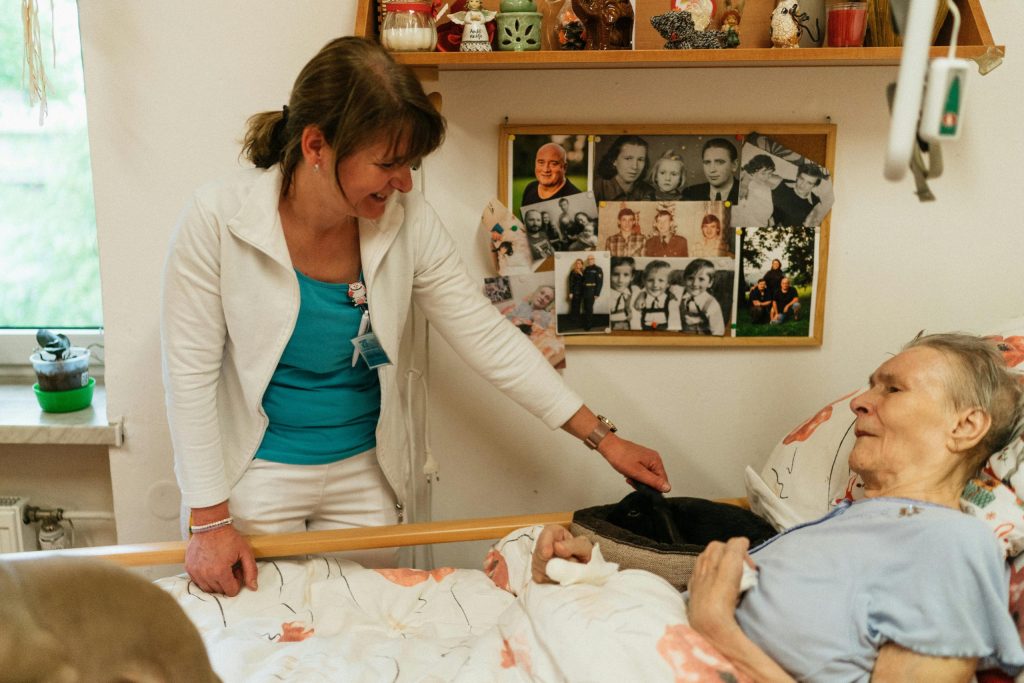
Support4Resilience ensures the wellbeing of eldercare staff through rising demand for services
Finland, alongside the rest of Europe, is facing an aging population that is placing more demand on already strained welfare systems. In response, eldercare systems are changing.
Eldercare systems are undergoing shifts in service provision that involve placing more responsibilities on frontline workers and their managers, exacerbating workplace stress and turnover rates. Support4Resilience project works to address this problem through understanding and fostering resilience in the workplace.
Support4Resilience (S4R) is an international consortium composed of researchers from 14 different collaborators across Europe and Australia. The project is exploring the challenges faced by individuals working in eldercare through both extensive reviews of the literature and conducting new interviews across 6 different European countries.
The need for an up-to-date understanding of challenges, stressors, and the nature of resilience in eldercare is warranted by significant demographic shifts. Old age dependency ratios in the EU have increased by over five percent between 2015 and 2025, with ongoing efforts to reduce disability years through healthy aging an ongoing effort (Eurostat, 2025; Hong et al., 2023). Nordic countries, with their emphasis on high-quality formal care, are being particularly challenged by this transition. Finland specifically faces these challenges given its above-average demographic aging and slow economic growth (Linnosmaa & Nguyen, 2016).
Combinations of staff shortages and ever-increasing demand for services has the potential to lead to significant challenges in staff burnout. Burnout among eldercare staff is associated with a variety of mental and physical health consequences that can impact quality of life (Andela et al., 2021; Nikunlaakso et al., 2022). Besides the individual suffering this burnout and its consequences imply for individual workerst. They can also lead to work avoidance and high turnover, leading to a cascading chain of workplace stress wherein the more staff avoid work due to stress, the more stress is placed upon those remaining to meet demands.
The need for resilience and how to foster it
Countering this burnout on a large scale requires a broad, preventative approach that fosters the strengths, or resilience of workers. To understand resilience as it stands among eldercare workers in Europe, S4R project conducted systematic reviews of the literature and interviews with workers and managers throughout Europe. While interviews affirmed the need for greater organizational approaches to fostering resilience among workers, systematic reviews of the literature found a lack of interventions to fill this gap (Glette et al., 2026; Vartiainen et al., 2025).
Working to fill this gap, S4R has developed the S4R Toolbox. Lead by consortium leader University of Stavanger and the University of Cyprus, the toolbox was developed through a co-design panel consisting of healthcare workers, healthcare leaders, informal caregivers and informal caregiver networks. From this co-design process emerged a tool centered around de-implementation, or the process of phasing out irrelevant, ineffective tasks and processes in healthcare (Walsh-Bailey et al., 2021).
Composed of three components, the toolbox encourages eldercare leaders and frontline workers to cooperate in mapping current practices, reflecting on what does and doesn’t work, and finally, identifying tasks for de-implementation. By doing so, the toolbox fosters communication between workers and leaders and removes unnecessary tasks from the workloads of both, improving resource efficiency. Through improving communication and team cohesion, the toolbox fosters resilience (Foà et al., 2020; Nikunlaakso et al., 2022; Ruotsalainen et al., 2020); by eliminating unnecessary tasks, it reduces challenges to resilience (Ring et al., 2024).
Putting theory into practice: Applications in the workplace
Following a general meeting of the consortium held at Turku AMK held 24.3. – 26.3. 2026, final feedback has been incorporated and the toolbox finalized. Now it is seeing implementation throughout six European countries: Finland, Norway, Romania, Italy, The Netherlands, and Spain. In Finland and Norway, this will take the form of cluster randomized control trials. Through implementation, researchers will use a mixed-methods approach to explore the efficacy of the toolbox. Pre- and post-implementation measures will be used to assess workers’ mental wellbeing, burnout, individual and organizational resilience, perception of patient safety, sick leave, and leadership support, among others.

kuva: Pexels.
Qualitatively, focus groups will be conducted with leaders and workers to explore the effectiveness and feasibility of the toolbox. Individual interviews will also be conducted with informal caregivers, to explore any extended effects the toolbox might have had. In Finland and Norway, these interviews will be replaced with cost-effectiveness and cost-benefit analyses. These will provide concrete measures of how many working hours the toolbox may save compared to other interventions and thereby paving the way for implementation on a larger policy scale.
Composed of multiple learning collaboratives, the intervention and its evaluation are being overseen by representatives of each partner within the six assessed countries. This involves representatives travelling to each participating eldercare team and discussing the intervention with team leaders, who in turn hold meetings with their staff. By overseeing implementation in person, and incorporating the feedback of participating workers as well as leaders, researchers gain hands-on experience with how the toolbox operates in real world settings and can refine it accordingly. Utilizing measures implemented every month over the course of one year, this will provide opportunities to see the effect of the toolbox over extended periods.
The aging of Europe’s population and its associated demands poses a significant, large-scale public health burden that requires a unified approach, while still maintaining enough adaptability and flexibility to address the organizational challenges of specific eldercare providers within each country. The S4R toolbox is poised to provide just such an intervention; uniform across countries in its guiding theories, but adaptable and intimate enough to fit the needs of specific work teams and their communication styles.
Through a thorough mixed-methods approach that collects user experiences alongside cross-country quantitative data and cost-effectiveness analysis, the S4R project is poised to have a feasible and easily adapted, evidence-based means of aiding eldercare workers and leaders in fostering the resilience they need to meet workplace challenges.
Support4Resilience
Recognising the challenges of stress and burnout among elderly care staff throughout Europe, and the accompanying labour shortages, is the reason for the Support4Resilience project was formed. Comprised of an international consortium of partners from across Europe and Australia, Support4Resilience has worked to devise a means of fostering resilience among elderly care staff, incorporating the advice of a diverse advisory board of high-profile experts. The result is the S4R Toolbox, a flexible tool capable designed to aid elderly care leaders in proactively addressing workplace challenges and reducing unnecessary workload through fostered communication between leaders and workers. Through its implementation and improvements in resilience among elderly care leaders, a chain of effects is expected throughout elderly care, including in patient safety and the wellbeing of informal caregivers. The implementation of the toolbox will be conducted throughout six different countries.
Research group: Mental Health Promotion
References
Andela, M., Truchot, D., & Huguenotte, V. (2021). Work Environment and Elderly Abuse in Nursing Homes: The Mediating Role of Burnout. Journal of Interpersonal Violence, 36(11–12), 5709–5729. https://doi.org/10.1177/0886260518803606
Foà, C., Guarnieri, M. C., Bastoni, G., Benini, B., Giunti, O. M., Mazzotti, M., Rossi, C., Savoia, A., Sarli, L., & Artioli, G. (2020). Job satisfaction, work engagement and stress/burnout of elderly care staff: Qualitative research. Acta Bio Medica : Atenei Parmensis, 91(Suppl 12), e2020014. https://doi.org/10.23750/abm.v91i12-S.10918
Glette, M. K., Akerjordet, K., Haver, A., Haraldseid-Driftland, C., Guise, V., Bergerød, I. J., Bal, R., Felder, M., Chatzittofis, A., Tibu, F., Raknes Sogstad, M. K., Odberg, K. R., Lahti, M., Sahla, S., Nevantaus, S., Ellis, L. A., Braithwaite, J., Clay–Williams, R., Schroeder, T., … Wiig, S. (2026). Factors supporting organizational and individual resilience for healthcare professionals and informal caregivers in elderly care settings – a systematic review. International Journal of Health Governance, 1–35. https://doi.org/10.1108/IJHG-06-2025-0085
Linnosmaa, I., & Nguyen, L. (2016). Long-term care expenditures in Finland. In Long-term Care for the Elderly in Europe. Routledge.
Nikunlaakso, R., Selander, K., Weiste, E., Korkiakangas, E., Paavolainen, M., Koivisto, T., & Laitinen, J. (2022). Understanding Moral Distress among Eldercare Workers: A Scoping Review. International Journal of Environmental Research and Public Health, 19(15), 9303. https://doi.org/10.3390/ijerph19159303
Ring, M., Ristolainen, H., & Tiilikainen, E. (2024). From Restricted Resources to Ethical Burden—Former Home Care Workers’ Reasons for Leaving Their Jobs. Journal of Applied Gerontology, 43(8), 1111–1119. https://doi.org/10.1177/07334648241231404
Ruotsalainen, S., Jantunen, S., & Sinervo, T. (2020). Which factors are related to Finnish home care workers’ job satisfaction, stress, psychological distress and perceived quality of care? – A mixed method study. BMC Health Services Research, 20(1), 896. https://doi.org/10.1186/s12913-020-05733-1
Vartiainen, A.-K., Lungu, D. A., Rissanen, E., Pirrotta, L., Scopis, L., Schroeder, T., Sogstad, M., Odberg, K. R., Hole, A., Delgado-Saborit, J. M., Lahti, M., Haraldseid-Driftland, C., Belle, N., Ellis, L., Wiig, S., & Kankaanpää, E. (2025). The effectiveness and economic evidence of organizational and management interventions to promote mental wellbeing and resilience in elderly care workers and informal caregivers – a systematic review. BMC Health Services Research, 25(1), 1345. https://doi.org/10.1186/s12913-025-13372-7
Walsh-Bailey, C., Tsai, E., Tabak, R. G., Morshed, A. B., Norton, W. E., McKay, V. R., Brownson, R. C., & Gifford, S. (2021). A scoping review of de-implementation frameworks and models. Implementation Science, 16(1), 100. https://doi.org/10.1186/s13012-021-01173-5